
How to Search Civil Dockets
Marion splits its civil court records across two systems. Circuit civil cases sit in Fifteenth Circuit MEC. Chancery cases sit in Tenth Chancery MEC. Neither interface lets an anonymous person browse case files, though each CourtInfo page is public. PAMEC is the paid remote subscriber route in. Prefer the clerk's free public terminal at the courthouse during regular business hours. A clerk can also tell you whether your case belongs to Circuit, Chancery, Justice, or Columbia Municipal Court.
A case number is your best starting point. It may come from a summons, an order, or an earlier notice. The court, the filing date, and the case type separate a true match from a similar name. A land instrument number helps with the land index, but it will not take the place of a court case number. Portal field labels vary, so do not guess them without a live Chancery or Circuit docket in front of you.
- Identify whether the matter is a Circuit civil case, a Chancery domestic, probate, equity, or land-related case, or a lower-court matter.
- Use the appropriate MEC CourtInfo page to confirm the court and its public access boundary.
- Register for PAMEC for remote public access, or use the clerk's terminal to view available electronic records without remote search charges.
- Compare the court, case number, filing date, and category before relying on an entry.
- Ask the custodian for a plain or certified copy when the docket points to a needed pleading, order, or judgment.
Marion Civil Docket Remote Access
PAMEC offers remote subscriber access to the Circuit and Chancery MEC records that are available. The non-attorney terms set a $10 annual registration charge plus $0.20 for each search page. A no-match search page still counts. Want free electronic viewing instead? Use the courthouse terminal during regular business hours. Even with remote access, some Marion civil docket records stay closed under a seal, a court order, attorney-only permission, an expired notice, or another confidentiality rule.
Marion Civil Docket Routes by Court
Which Marion court holds your civil docket depends on the subject matter. Circuit Court keeps general original jurisdiction over civil cases not assigned elsewhere. It also hears appeals from the lower courts. Chancery Court takes the equity, domestic, probate, guardianship, conservatorship, adoption, and land or title matters the county identifies. Read the case caption for the court's name. Do not rely on a broad label like "civil record."
| Marion civil matter | Likely record custodian | Useful access route |
|---|---|---|
| General civil filing, judgment, subpoena, or lower-court appeal | Circuit Clerk | Fifteenth Circuit MEC, PAMEC, terminal, or Circuit Clerk request. |
| Divorce, custody, estate, guardianship, adoption, equity, or title dispute | Chancery Clerk | Tenth Chancery MEC, docket links, terminal, or Chancery Clerk request. |
| Deed, mortgage, lien, or lis pendens instrument | Chancery Clerk land-record counter | Land-record index for the instrument, then a separate case search if litigation is involved. |
The Marion County Chancery Clerk page covers the office's civil and land-record duties. Land records, though, are not the same as a case docket.
What a Civil Docket Shows
Think of a Marion County civil docket as an index, not a story. It tracks case activity line by line. A MEC record can show the court and county, the case number, the case category, and the assigned Chancellor when one applies. It also lists the filing date and parties or counsel where public. Setting or return dates appear there. Docket entries come with links to filed documents. Fee markers and any seal or restriction status appear there too. Labels differ depending on the interface you use, and the court posts no anonymous sample case to study.
| Case Number | The court-assigned identifier used to find the right file and request a copy. |
|---|---|
| Case Style and Type | Shows the short caption and category, such as civil, domestic, probate, guardianship, equity, or appeal. |
| Filing and Docket Dates | Distinguish the opening of the case from later motions, notices, settings, and orders. |
| Assigned Court | Shows the Circuit or Chancery route and, where public, the assigned Chancellor. |
| Access Status | May indicate a seal, restriction, document permission limit, or another boundary on public viewing. |
A docket entry records that something happened. That is all. It does not reveal how a judge ruled, whether the matter was resolved, or whether a later order changed the result.
Marion Civil Docket Flags in Chancery
Flags on the Tenth Chancery MEC CourtInfo page explain the administrative posture of a Marion County Chancery case. Read them as workflow signals. They are not a confidentiality ruling. They never replace the docket itself. A few flags matter most for probate, guardianship, trust, domestic, and alternative-dispute-resolution work.
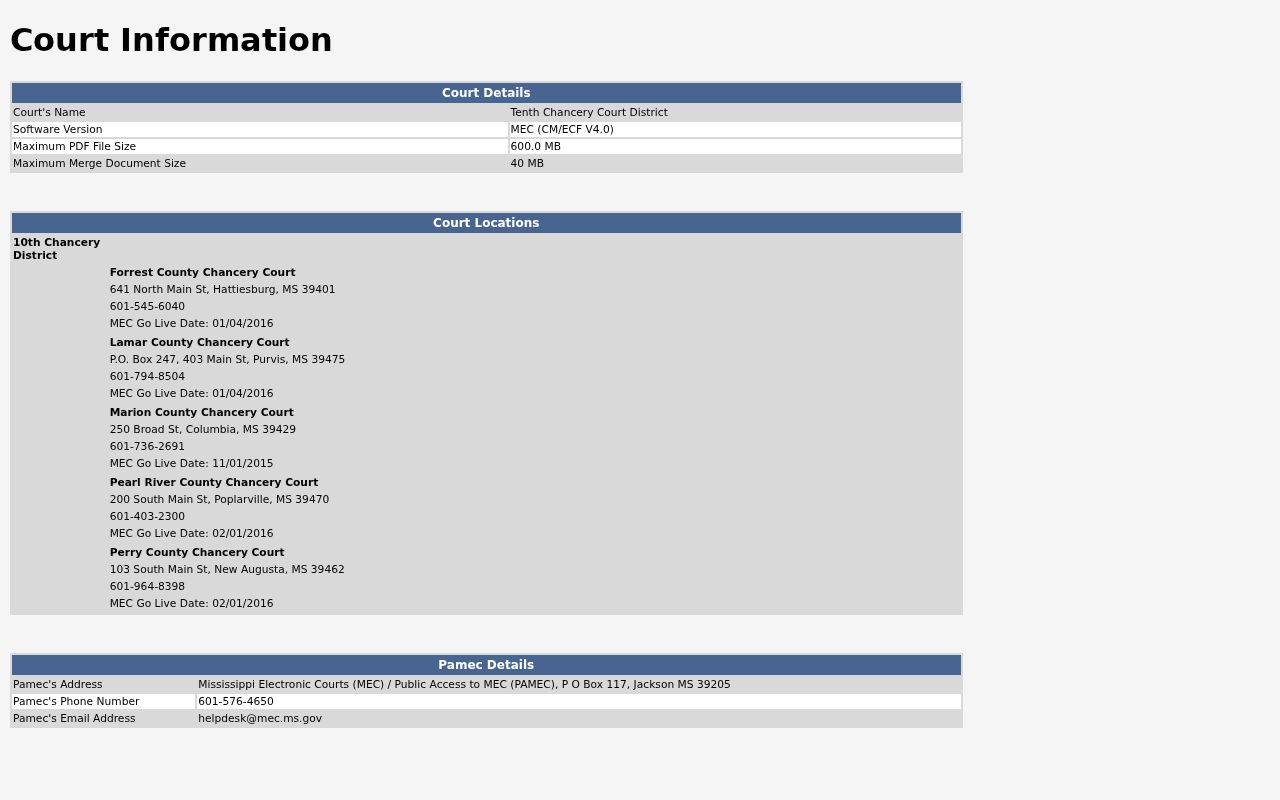
The public flag vocabulary explains a common puzzle: why a case shows deadlines or special roles while some supporting documents stay out of public view.
- Accounting Due
- A probate or ward-related accounting deadline is tracked in the court workflow.
- Guardian or Conservator Plan
- A plan filing or related status appears in a ward matter.
- Mediation
- An alternative-dispute-resolution event has been marked; it is not a merits ruling.
- Ex Parte
- A matter may be presented without the ordinary opposing-party appearance.
- Sealed
- Access is limited by court order, rule, statute, or system permission.
Types of Civil Cases on the Docket
Civil work in Marion County does not sit in one clerk's system. Instead, the civil docket splits between Circuit Court and Chancery Court. Circuit takes general civil lawsuits, judgments, executions, and subpoenas. Appeals come over from Justice Court or Municipal Court. Chancery carries the county's family matters and estates. It also handles guardianships, conservatorships, adoptions, equity claims, and land or title disputes. One property fight can even leave a Chancery case file plus a separate recorded instrument. Both streams may hold pieces of the same story.
- General civil lawsuits and lower-court appeals in Circuit Court.
- Divorce, custody, alimony, and other domestic matters in Chancery Court.
- Estates, guardianships, conservatorships, and related probate administration.
- Adoptions and selected equity or title disputes.
- Recorded deeds, mortgages, liens, and lis pendens as land instruments rather than case dockets.
Justice Court handles its own lower-court civil cases in Marion County. Those records never turn into Circuit dockets just because a search started there. Check the summons, or ask the clerk, to confirm which court holds the civil case before digging through a docket.
Marion Civil Docket Circuit Record Requests
The Circuit Clerk is the office that receives civil lawsuits, motions, judgments, executions, subpoenas, and appeals from the lower courts. When requesting a Marion Circuit civil record, gather the case number if you have it. Also note the date range, the exact document wanted, and whether the copy must be plain or certified. The clerk's current fee schedule sets a $10 civil or criminal search. That search covers a ten-year period. That same schedule breaks out filing and process charges by category. Ask the clerk to confirm which charge applies before sending payment, since the wrong label can slow a court records request down.
Marion Civil Docket Assignment in Chancery
Marion County civil cases run under the Tenth Chancery's local rules. Those rules shape the docket in a distinctive way. Every new civil action is assigned randomly and equally among four Chancellors. That assignment sticks unless the rules allow a transfer, reassignment, or recusal. Place 2 is named specifically as the Chancellor handling Marion. One more tip from the rules: flag any related prior filing for the clerk, because it can change how the court handles the new matter. The Tenth Chancery local rules lay out the full assignment and scheduling framework. That framework governs Marion civil docket cases.
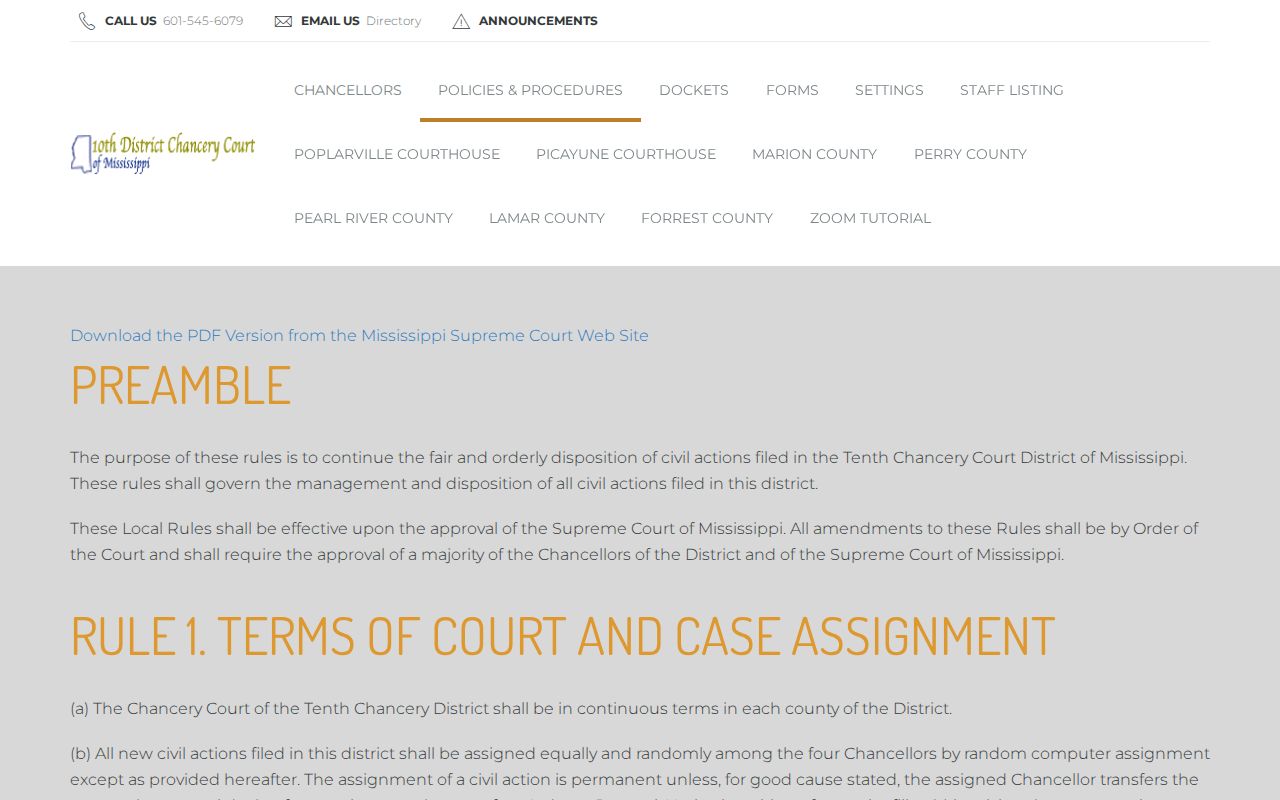
Special Youth Court cases sit outside the ordinary random-assignment rule. The same goes for mental commitments and alcohol or drug commitments. A public civil docket in Marion County will not track those routes the way it tracks ordinary civil files.
Settings and Hearings on Civil Dockets
A setting on a civil docket just means a court event is on the calendar. It says nothing about who won. Circuit judges publish term and hearing information on their calendars. Chancery runs its own setting-request system apart from that. Its local rules govern notice, timing, judicial discretion, motions, trials, return dates, and continuances. Need a court-date route that tells calendars apart from the case docket? Use the Marion County court calendar.
Chancery sorts settings into categories: motion, trial, pretrial conference, status conference, ID divorce, probate, determination of heirs, Rule 4(i), ex parte, uncontested adoption, and other settings. A filed request is only a request. The docket confirms a date when the resulting order appears.
Marion Civil Docket Post-Judgment Timing
Under the Tenth Chancery local rules, post-trial and post-judgment motions should be set within 45 days. That deadline governs scheduling only. A web request is not a confirmed court date. Anything further needs the proper notice and setting process. What proves a Marion civil matter has actually been set is a docket entry, a court order, or an administrator's confirmation.
Marion Civil Docket Setting Requests
Through the Tenth Chancery settings hub, a user picks the type of setting being requested. Read its warning closely. Submitting the form does not confirm availability. The case stays off the docket until a Court Administrator confirms a date and time. If the site has technical trouble, the court says to send date requests straight to an administrator.
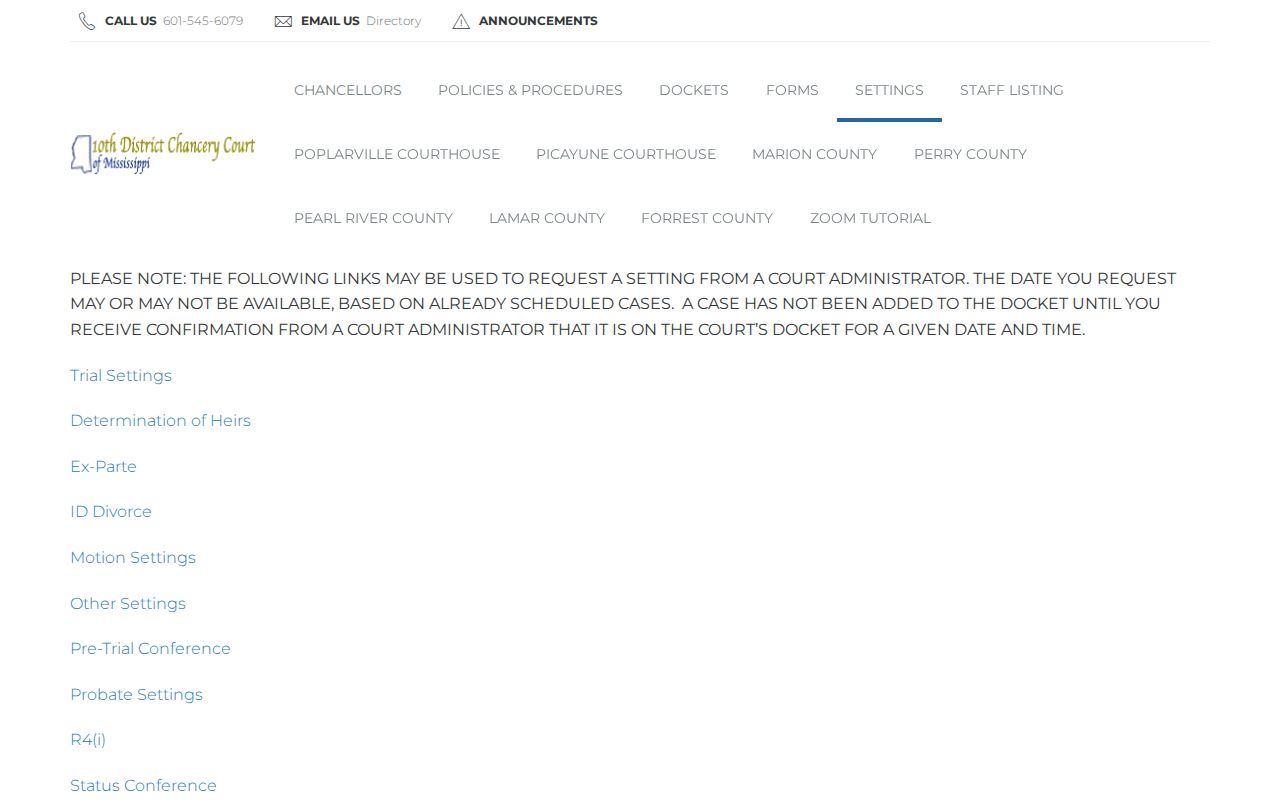
This confirmation rule exists for a reason. A requested date range should never be mistaken for an actual court setting. Once a date is assigned, keep the administrator's confirmation and the case number handy.
One example of the routing details involved is the Chancery ID-divorce setting form. It collects the county, judge, case number, and style of case. The form also gathers the date range, filing date, and attorney or pro se information for that single civil setting request.
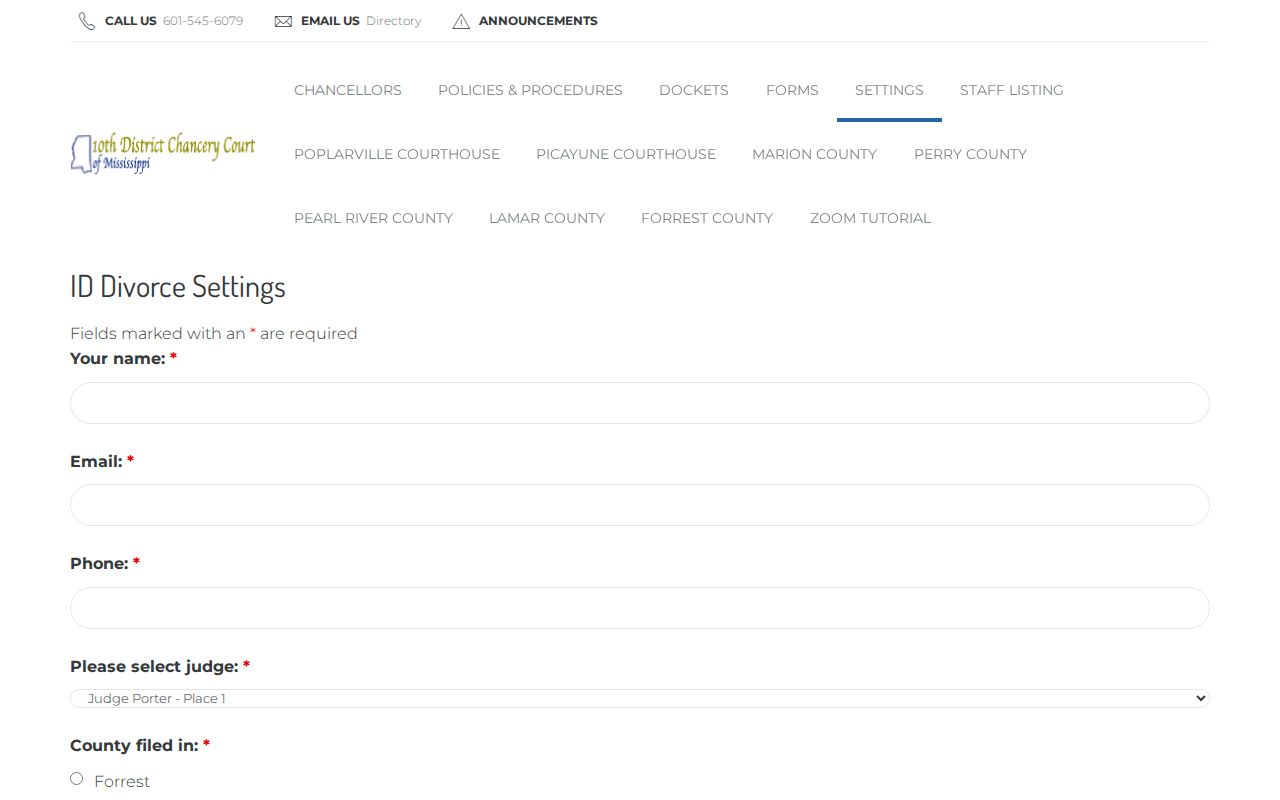
Remember that the form is an administrative request, not a public case result. Probate forms and status-conference forms each ask for their own setting-specific details. That is why the right form depends on the type of civil proceeding.
Public Access to Civil Dockets
Access to a Marion civil docket comes in layers. Mississippi public-records law opens the door generally. Court orders, statutes, privacy rules, seals, and MEC permissions can still close parts of a record. Adoption, domestic, guardianship, conservatorship, mental-commitment, ward, and ex parte materials often hold private details even when the case title or a bit of docket activity shows. So do not assume a remote result tells the whole story. Ask the right clerk about a redacted public copy.
Key Rules:
Mississippi Code § 25-61-2 provides the general public-records principle, subject to exemptions and court restrictions.
Mississippi Code § 25-61-5 addresses inspection, copying, and reasonable procedures through the record custodian.
Mississippi Code § 43-21-255 makes Youth Court and child records confidential except for narrow statutory access.
Viewing a record through remote PAMEC access or a public terminal does not certify anything. The clerk can tell you whether a document is public, redacted, sealed, restricted, or sitting in another court office.
Marion Civil Docket and Land Record Boundary
For deeds, mortgages, liens, lis pendens, parties, dates, legal descriptions, parcel IDs, and instrument references, the county's land-record search is the right tool. It is not a civil case docket. An instrument may flag a property dispute. Yet it cannot show where the Chancery case now stands, what motions followed, or what any order said.
In a Marion property dispute, hold onto both identifiers. Keep the instrument number or book and page for the land record. Keep the case number for the court file. The online index is informational; the courthouse index is official. A land search therefore works alongside the Chancery Clerk or MEC case route. It never works in place of that route.